The Role of Children in Public Space
In partnership with the urban planning and development agency for the Flandre-Dunkerque region, AGUR.
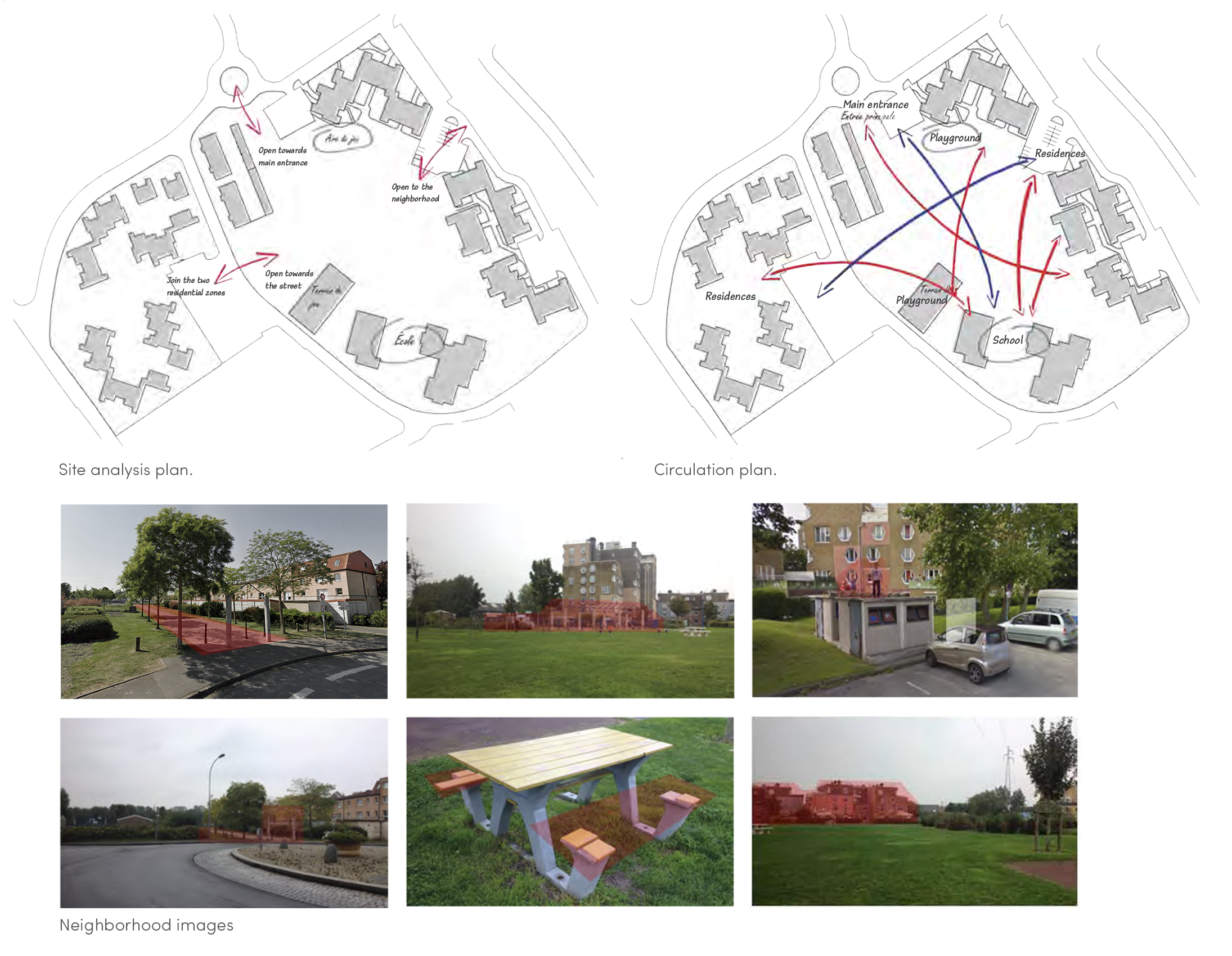
Today, the Degroote neighborhood is considered one of the most problematic areas in the city of Dunkirk. With issues ranging from substandard housing to drug trafficking, Degroote has become a top priority for the city council, which aims to revitalize struggling urban zones in order to reduce inequalities between neighborhoods.
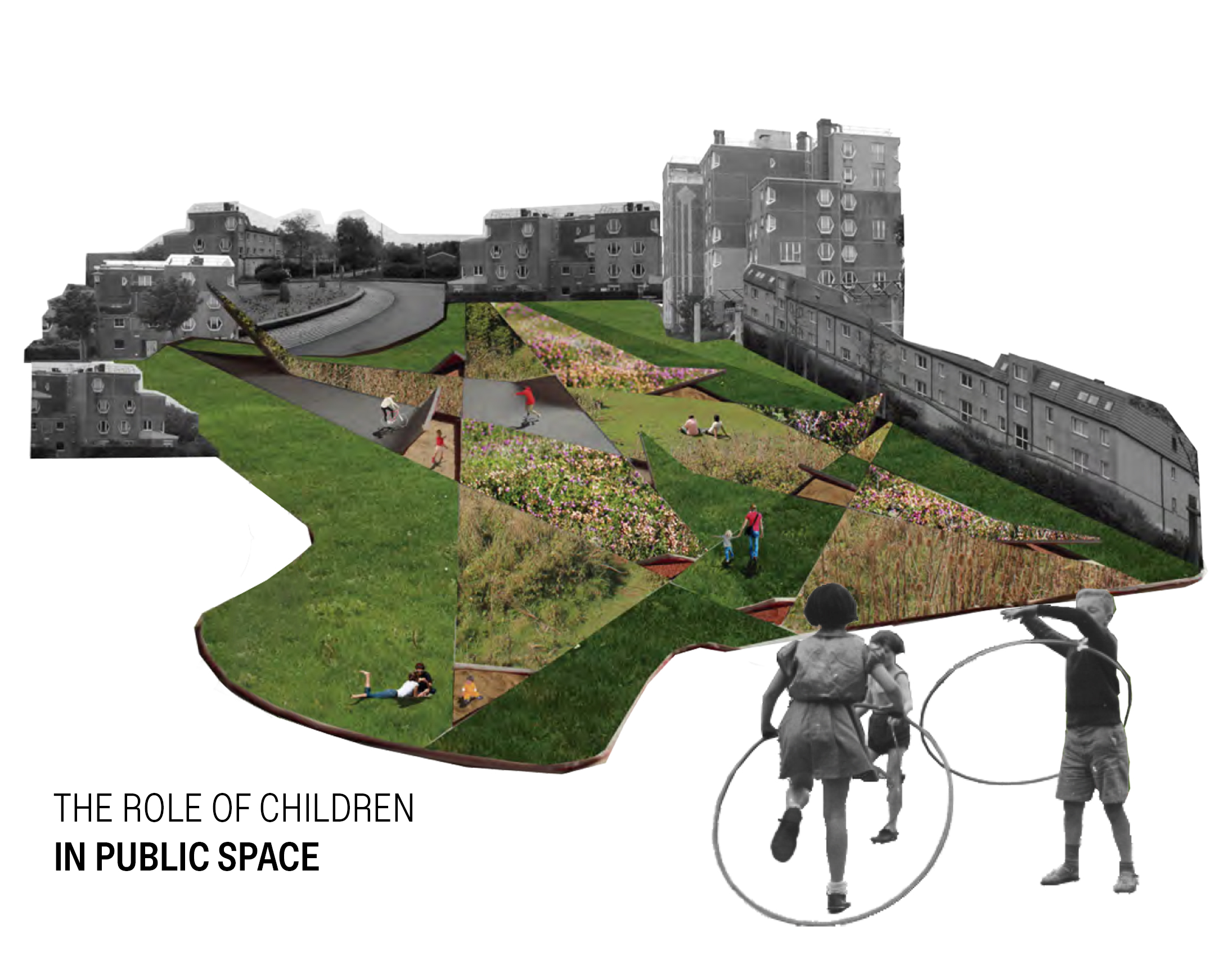
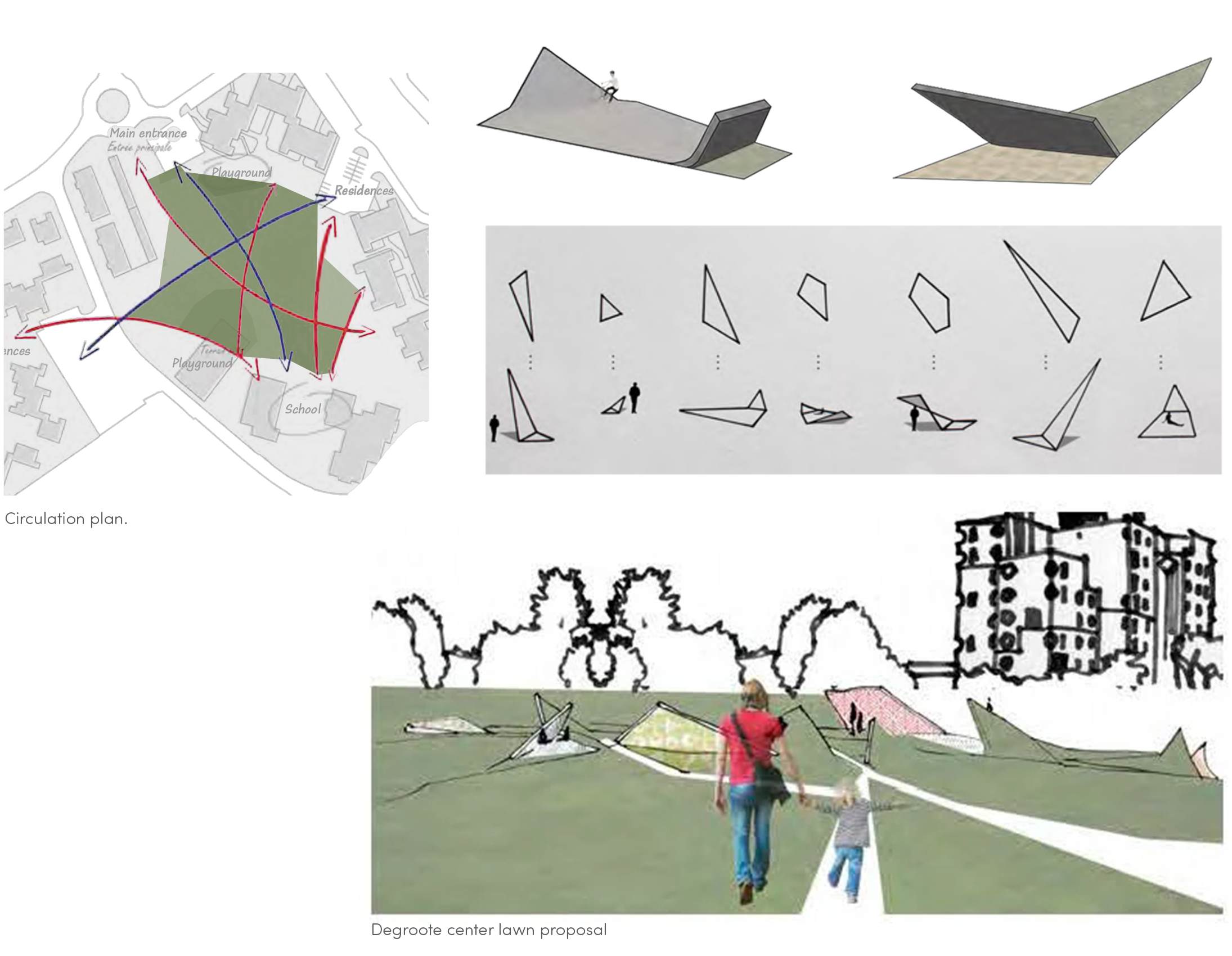
As this site is undergoing development for social housing, including a community center, a school, and a large green space, it was essential to design a project that addresses the needs of children while also generating a positive economic impact for the community. This transformation has the potential to offer a long-term solution to issues of insecurity and the lack of community ownership of the space.To meet the expectations of the city of Dunkirk, several proposals were developed. The first involves transforming the green space by dividing the ground into several segments based on primary and secondary circulation paths. Some of these segments would be elevated at their ends, creating usable space underneath for features such as a play area, sandbox, or community garden.
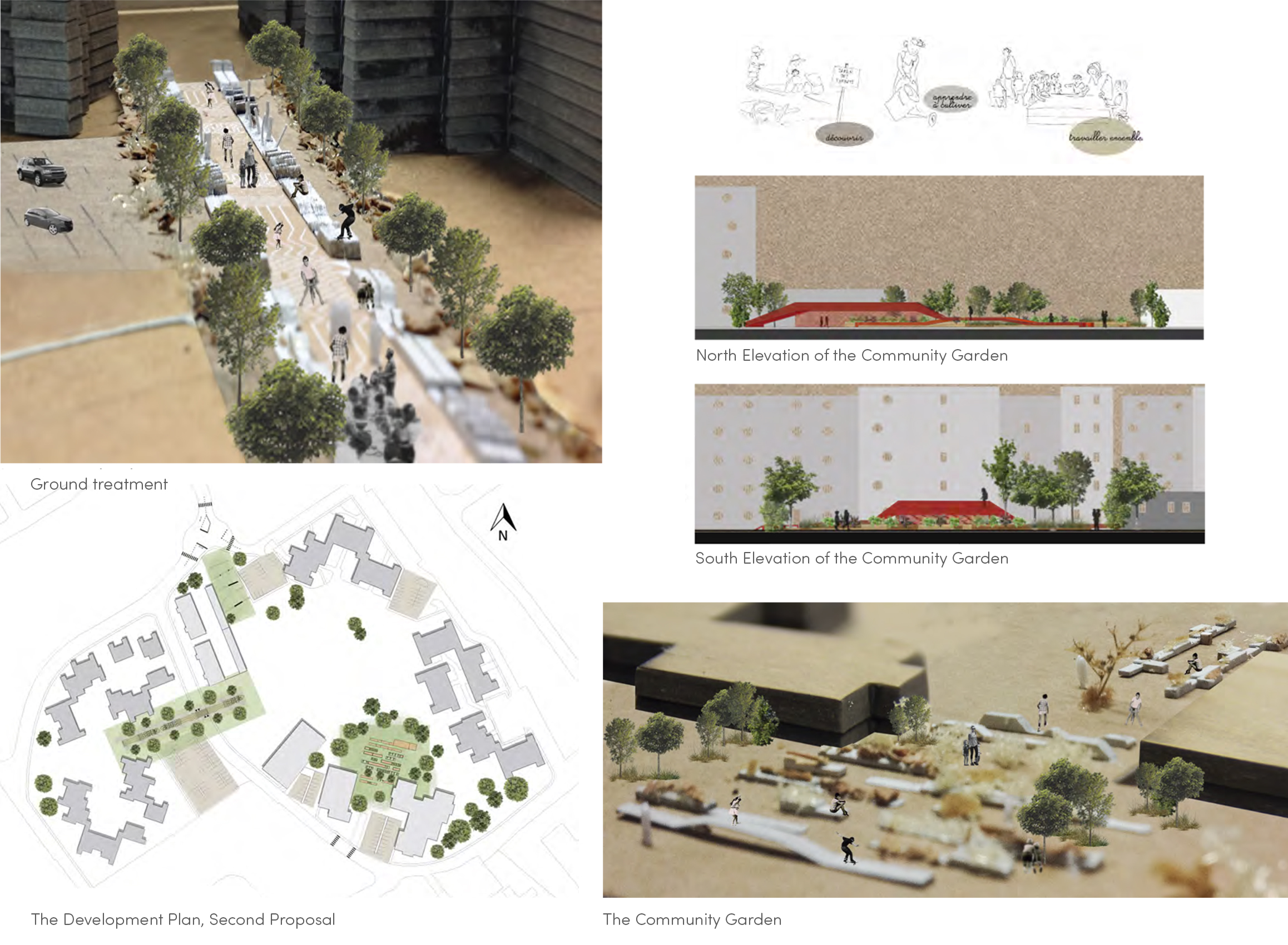
The second proposal involves creating small-scale structures distributed across three key zones. The strong community engagement observed during the development of the first three spaces allows for the active involvement of many local residents. These installations are therefore built with the participation of the community, tailored to their collective needs and aspirations.
The Entrance: A Gateway to the City.
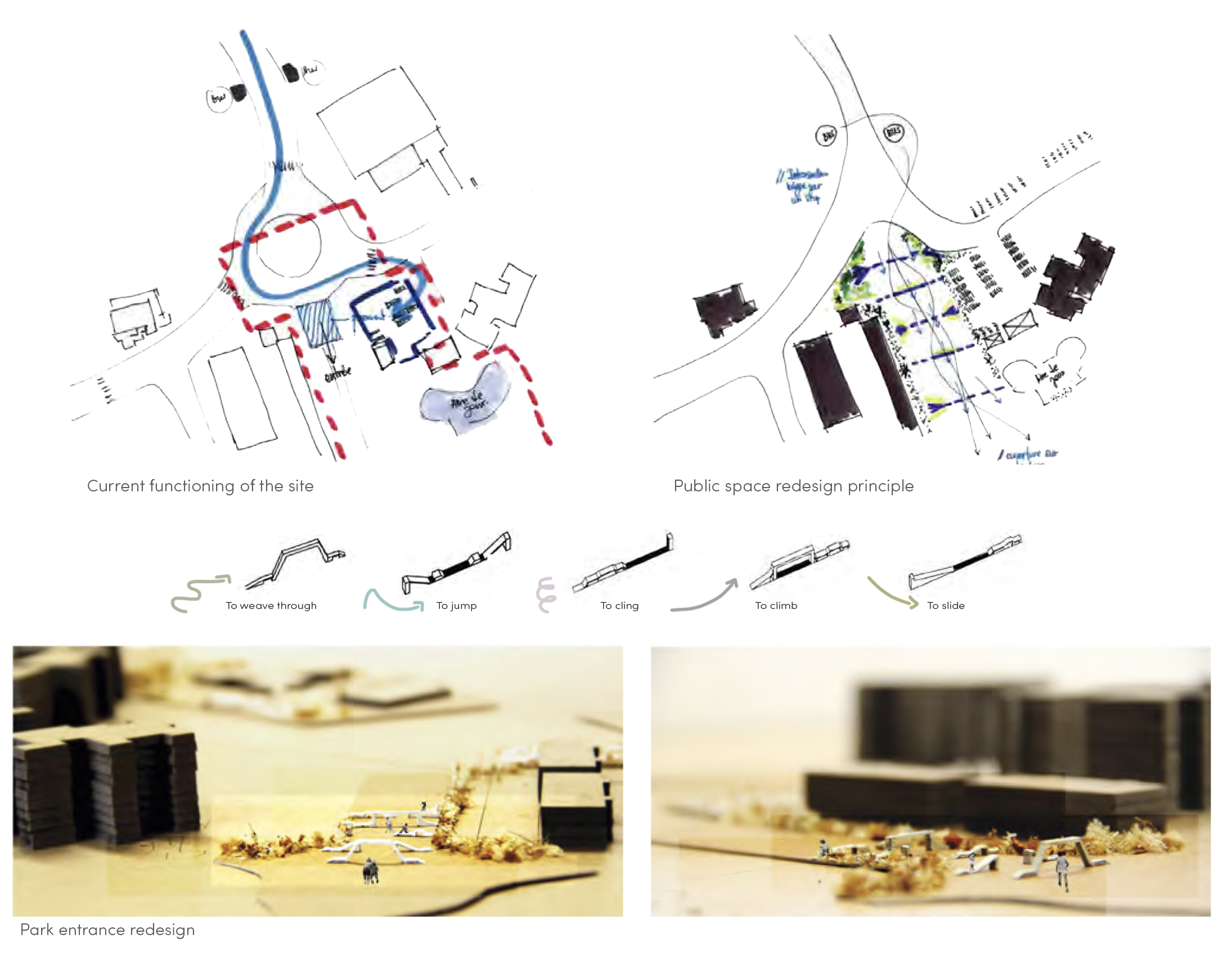
The goal of the intervention at the park’s entrance is to reestablish a connection with the Furnes Canal and the city. The idea is to reverse the sense of isolation felt by residents of the neighborhood.
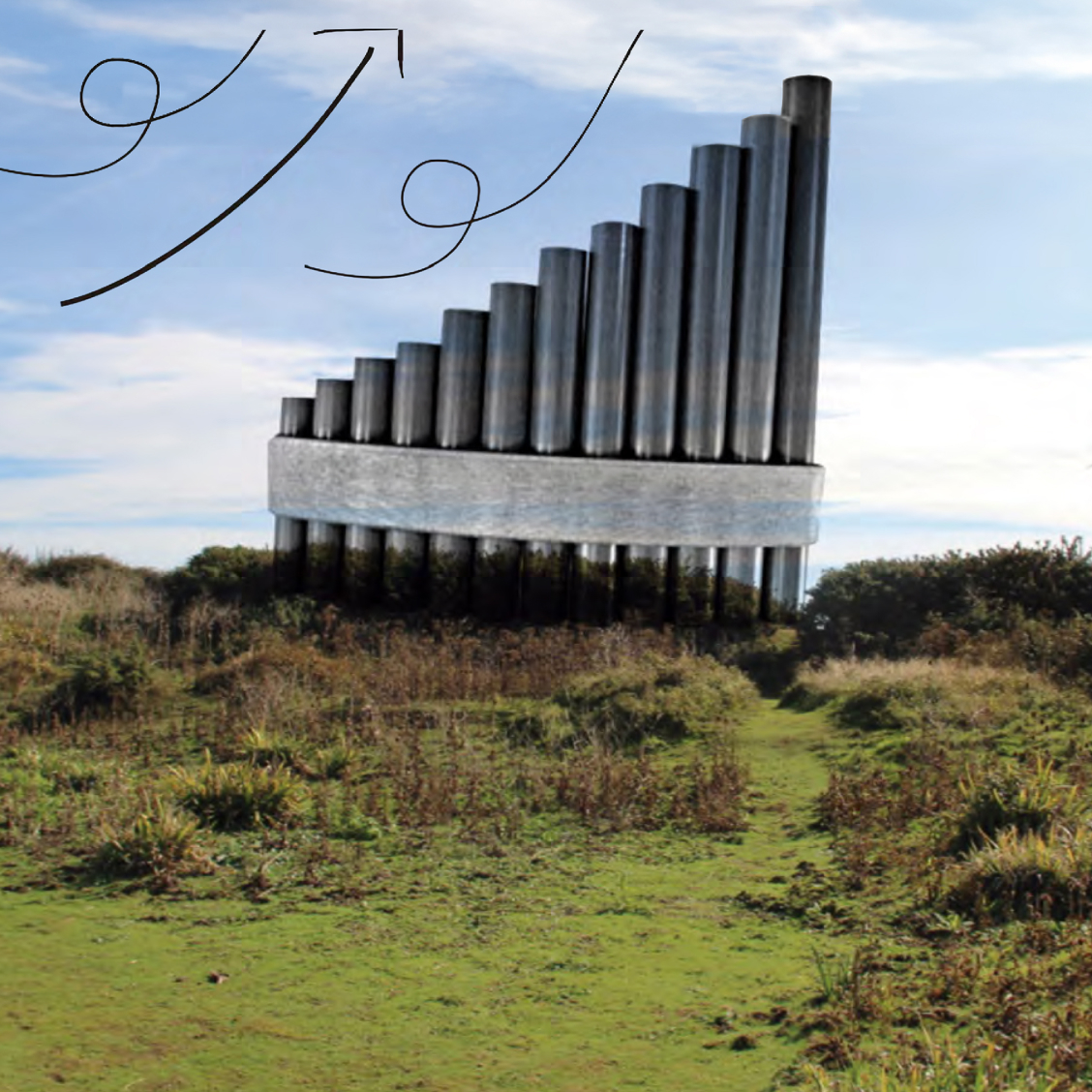
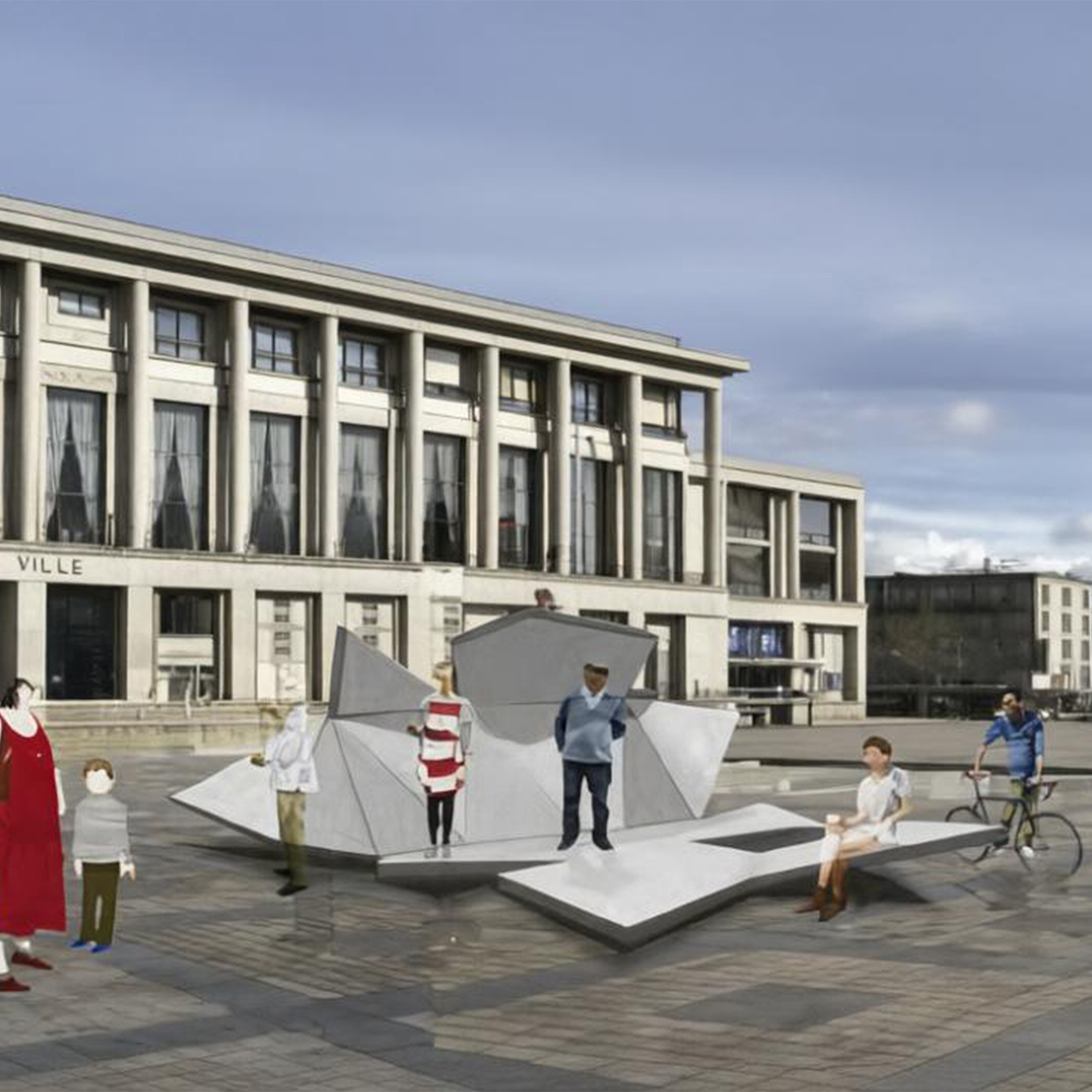
To offer a broad view from the canal, the park entrance is widened, creating space for multifunctional structures. First, they act as visual frames, guiding the eye toward the canal. Second, they serve as play elements. Their shapes influence movement while also inviting playful interaction and use.
The entrance is no longer just a transitional space, it becomes a truly inhabited and activated area.
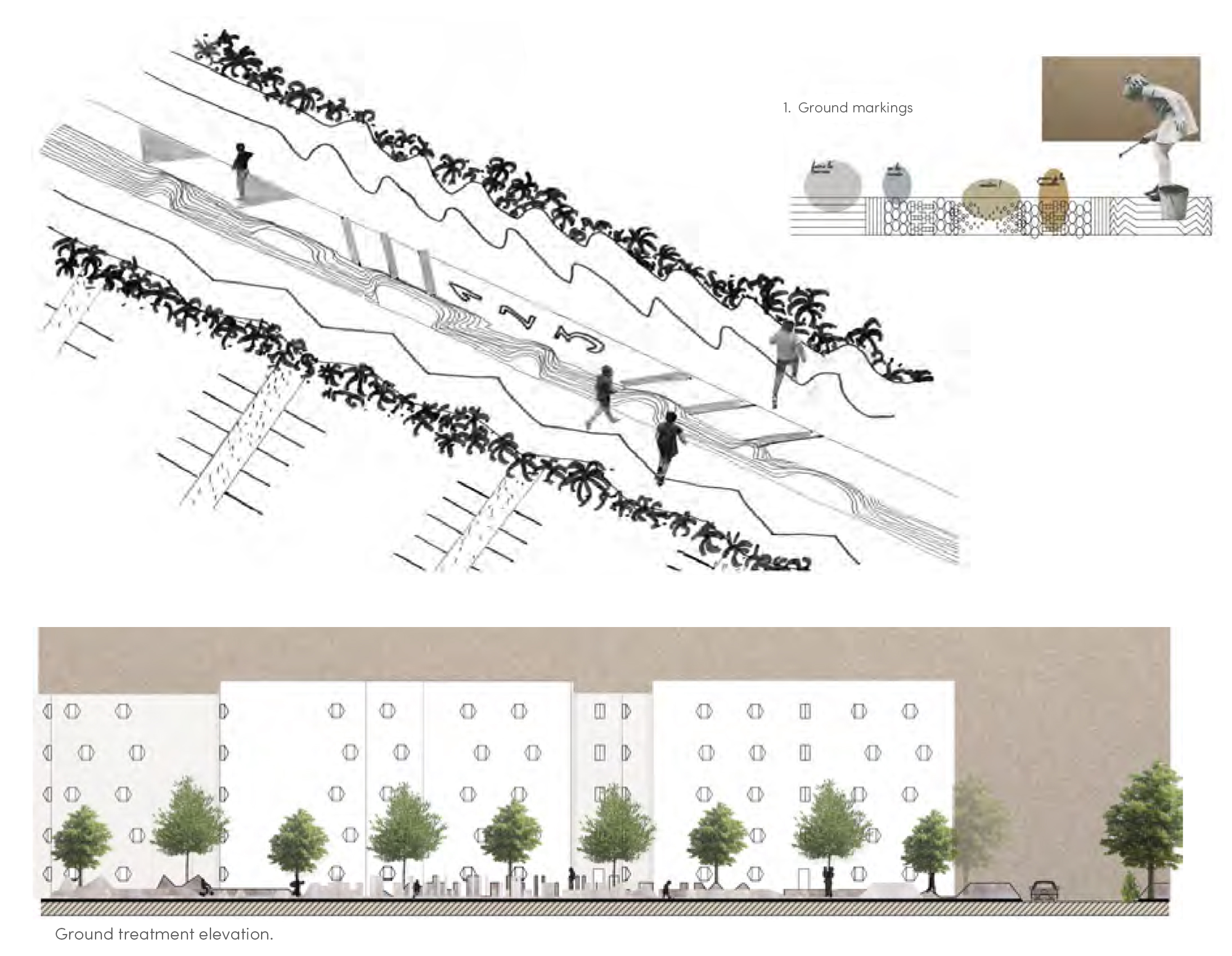
This second intervention aims to create a connection between residential areas currently divided by the road and the parking lot. A wide pathway, featuring a painted grid on the ground, encourages various forms of playful use. On either side, the grid is reinforced by three-dimensional installations.
As a space for movement, relaxation, and social interaction, this unique layout contributes to transforming the atmosphere of the neighborhood.
The Garden: An Evergreen Space.
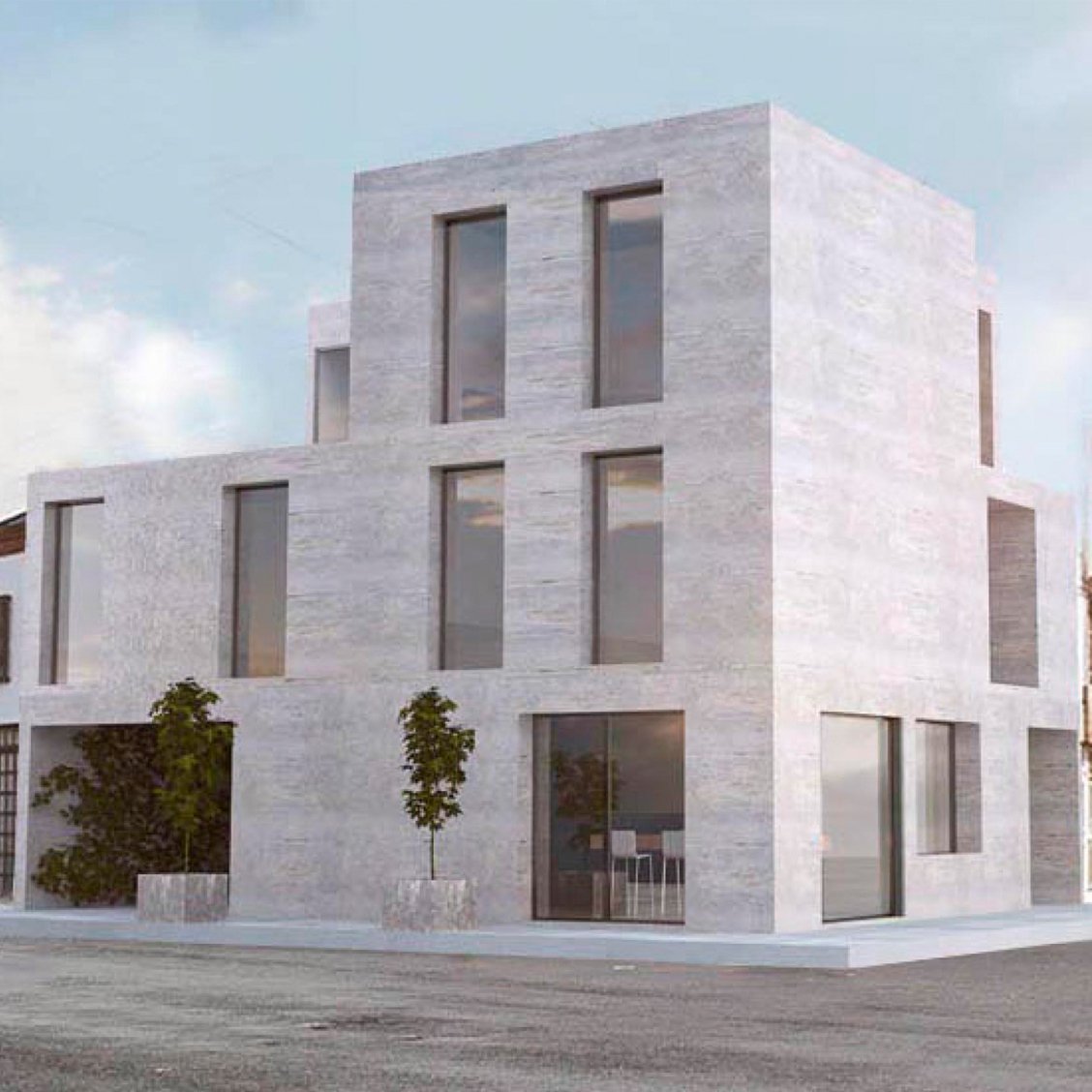
Located near the community center and the school complex, the third intervention creates a new southern entrance to the park. Parking areas and access points for both facilities are reorganized to promote openness and shared use.
A spacious, communal forecourt is developed, opening onto the urban park. The community garden adjacent to the center is expanded and reconfigured, making it accessible directly from the park. This allows the space to bring together both community center users and schoolchildren.
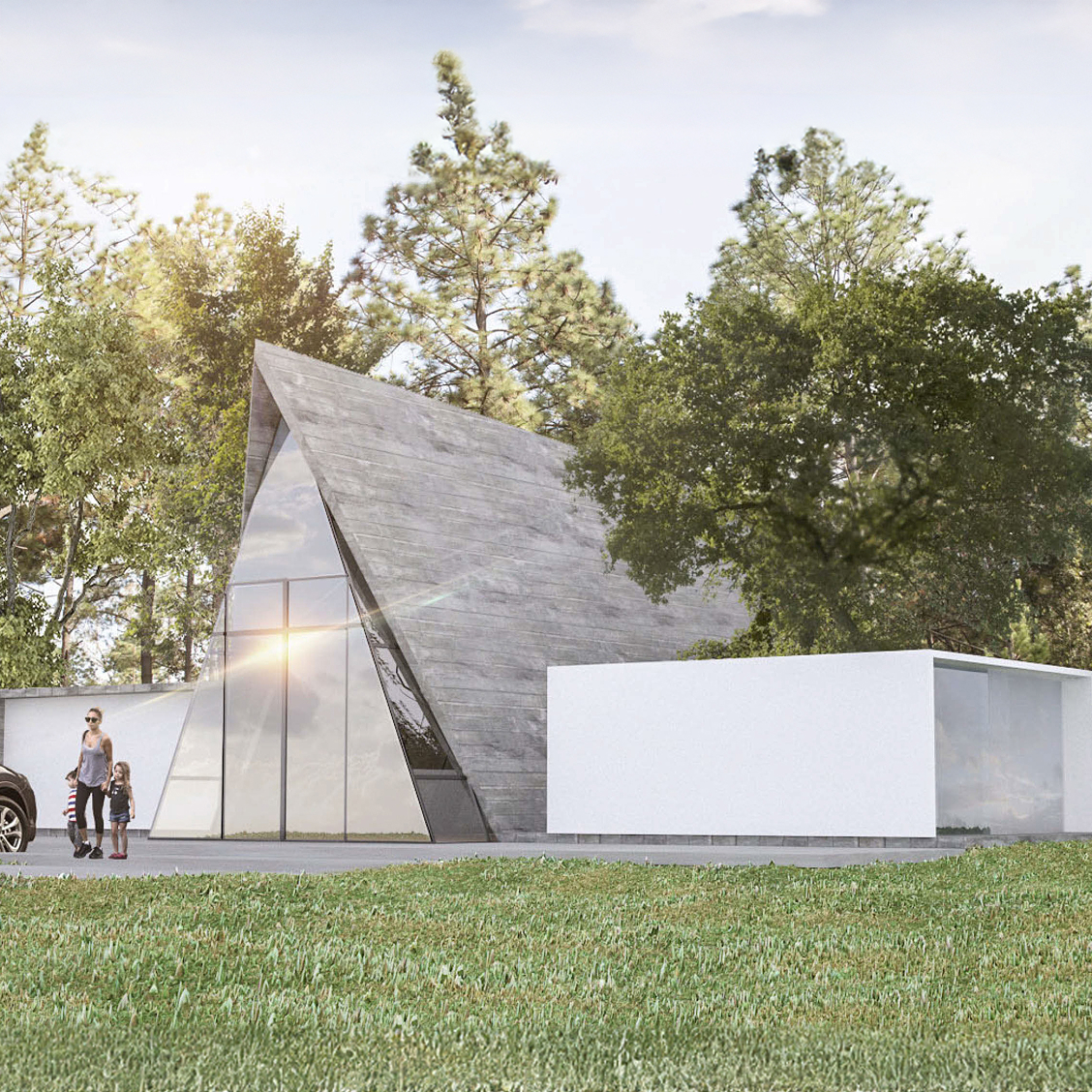
Furniture is added to structure and define different areas, while a small-scale structure is integrated into the garden to store gardening tools, its façades doubling as playful elements. Maintenance of the garden is entrusted to local residents, with children learning about cultivation and the community center overseeing activities and ensuring the garden functions smoothly.