The Study Center
This project arose from an identified necessity of the student body. With the steady growth of the student body and the evolving demands of creative academic programs, the Vasco de Quiroga University campus in Morelia, Michoacán, faced increasing pressure on its outdated infrastructure. The existing library was small, poorly lit, and spread across two separate buildings, making it impractical and uncomfortable for daily use. Computer labs were equally outdated, located in basement spaces with minimal lighting and limited access, particularly for architecture and design students who had to cross campus to use shared facilities that were often unavailable due to class schedules. As a result, students were forced to use corridors, classrooms, and lobbies for collaborative work, highlighting the urgent need for a centralized, functional academic hub.
This proposal sought to address those challenges by creating an integrated, modern space that prioritized accessibility, collaboration, and comfort. Designed to unify the Architecture, Graphic Design, Communication, Interior Design, and Engineering departments, the new center provides not only state-of-the-art library and lab facilities, but also inviting communal areas that foster creativity and exchange. It was also essential that the design feel contemporary and inspiring, while remaining harmonious with the existing campus architecture, modern without being intrusive. More than just solving a logistical issue, the project aims to strengthen the academic experience, encourage interdisciplinary interaction, and become a symbol of innovation for the university community.
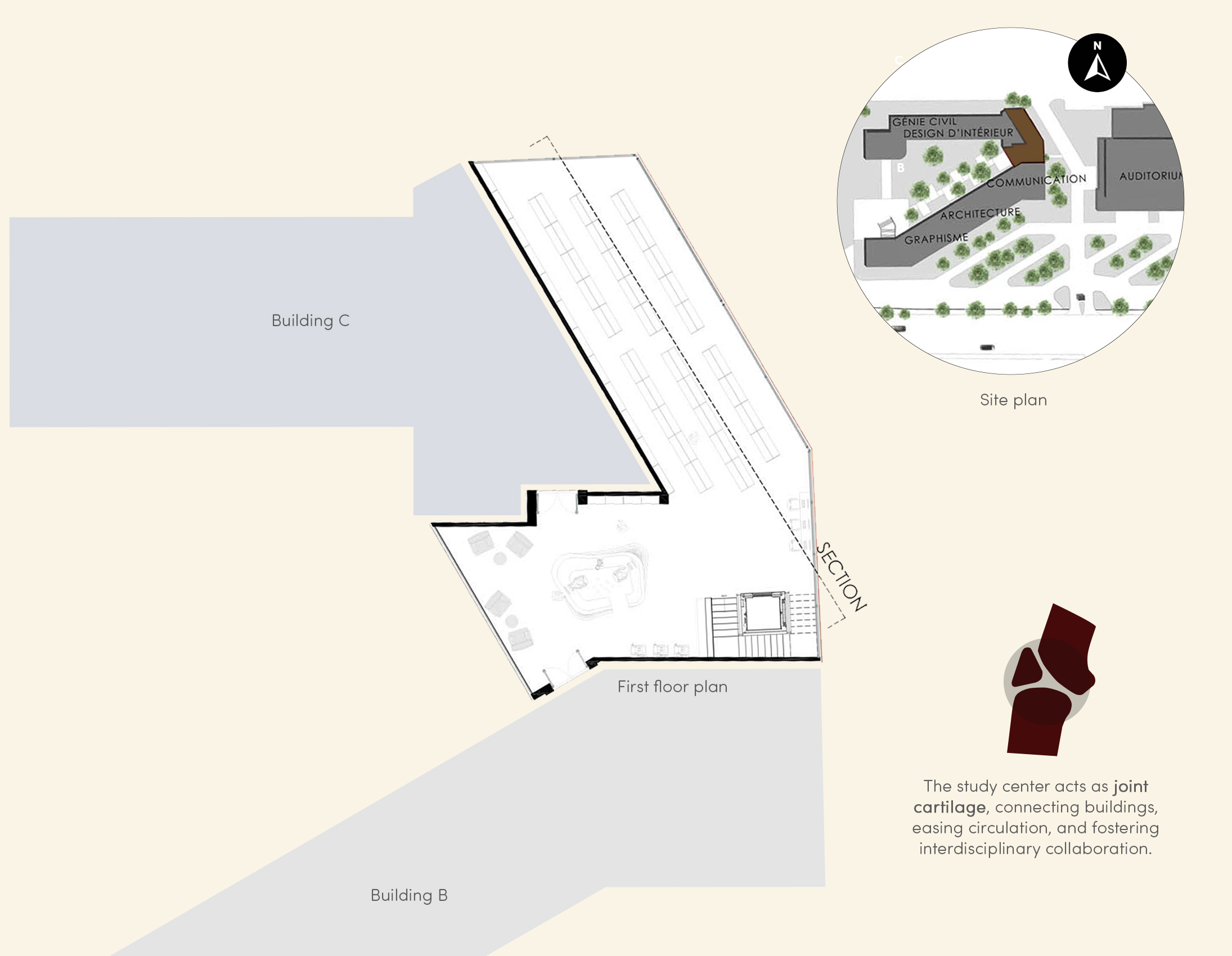
Equally important was the physical and academic integration of the two main academic buildings: one housing the creative programs such as Architecture, Graphic Design, and Communication, Building B; the other serving Engineering and Interior Design, Building C. Students frequently move between these buildings for classes, often carrying models, printed plans, and materials, an especially challenging task on rainy days or for those with mobility challenges. The new center was strategically positioned between the two buildings, linking them at their far ends.
Conceptually, it draws inspiration from joint cartilage, a type of connective tissue that reduces friction, provides support, and allows movement between bones. Just as cartilage enables smooth interaction between parts of the body, this study center was designed to ease circulation, support academic flow, and foster collaboration between disciplines. It becomes not just a passage, but a vital and symbolic connector, a space that enables ideas, students, and learning to move freely and grow together.
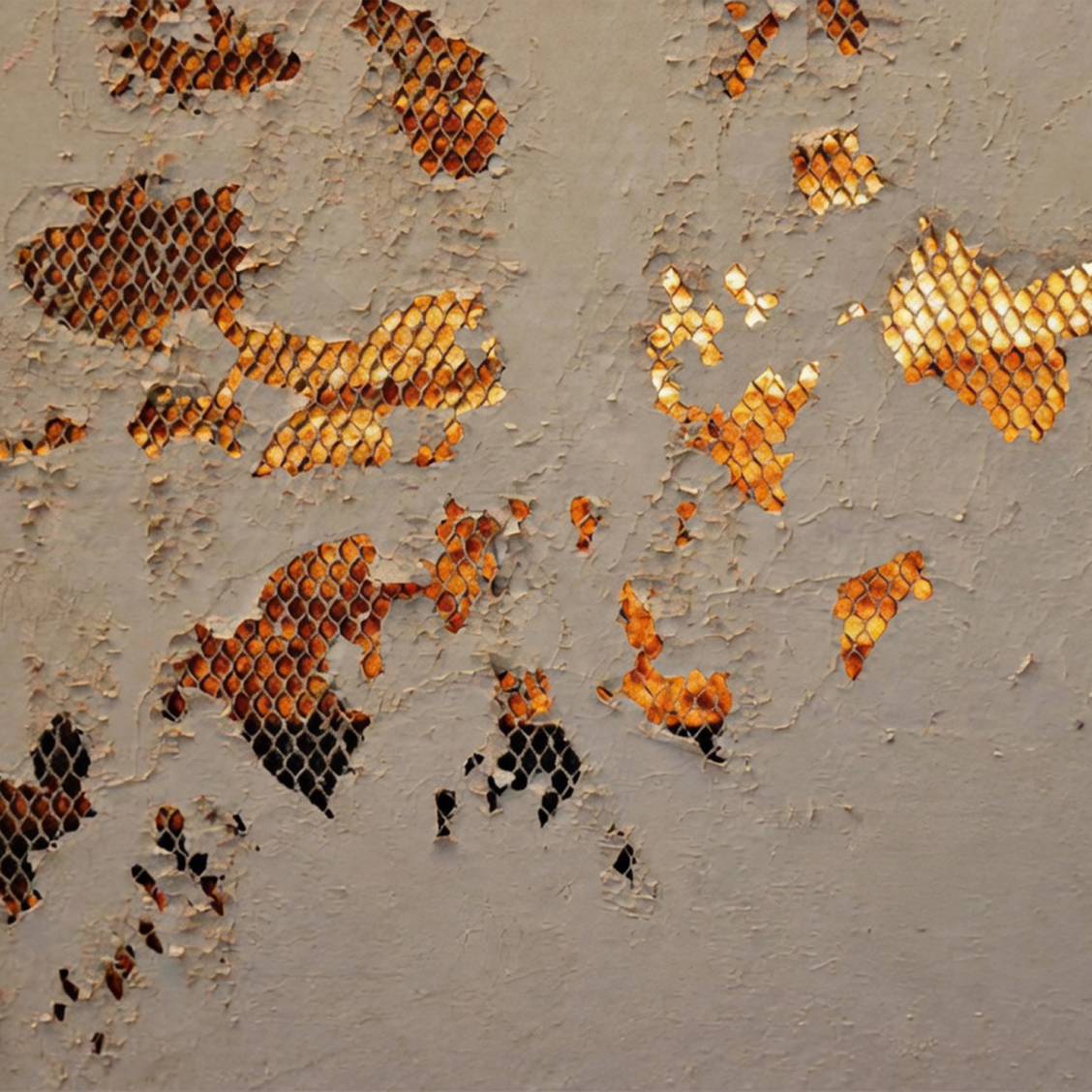
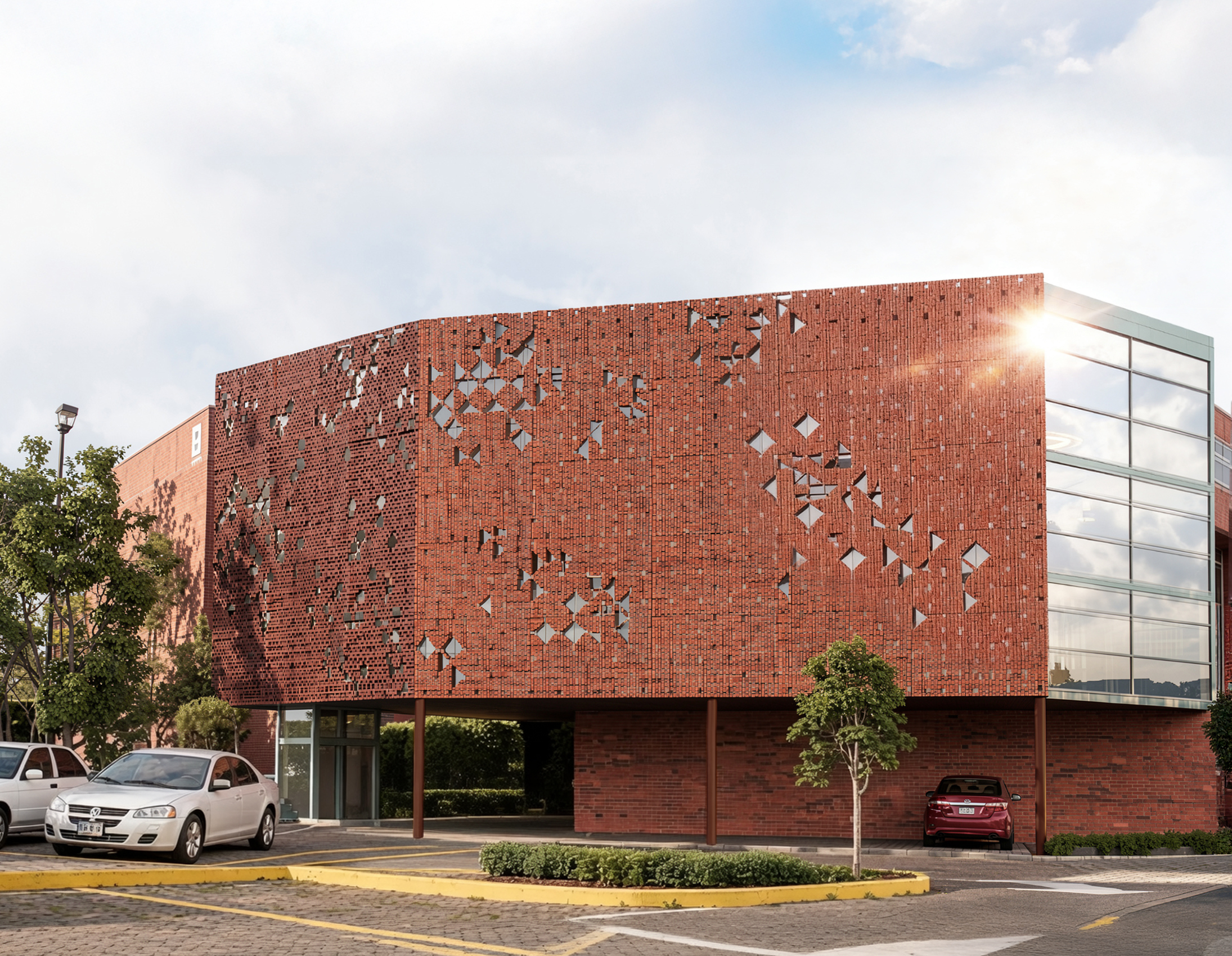
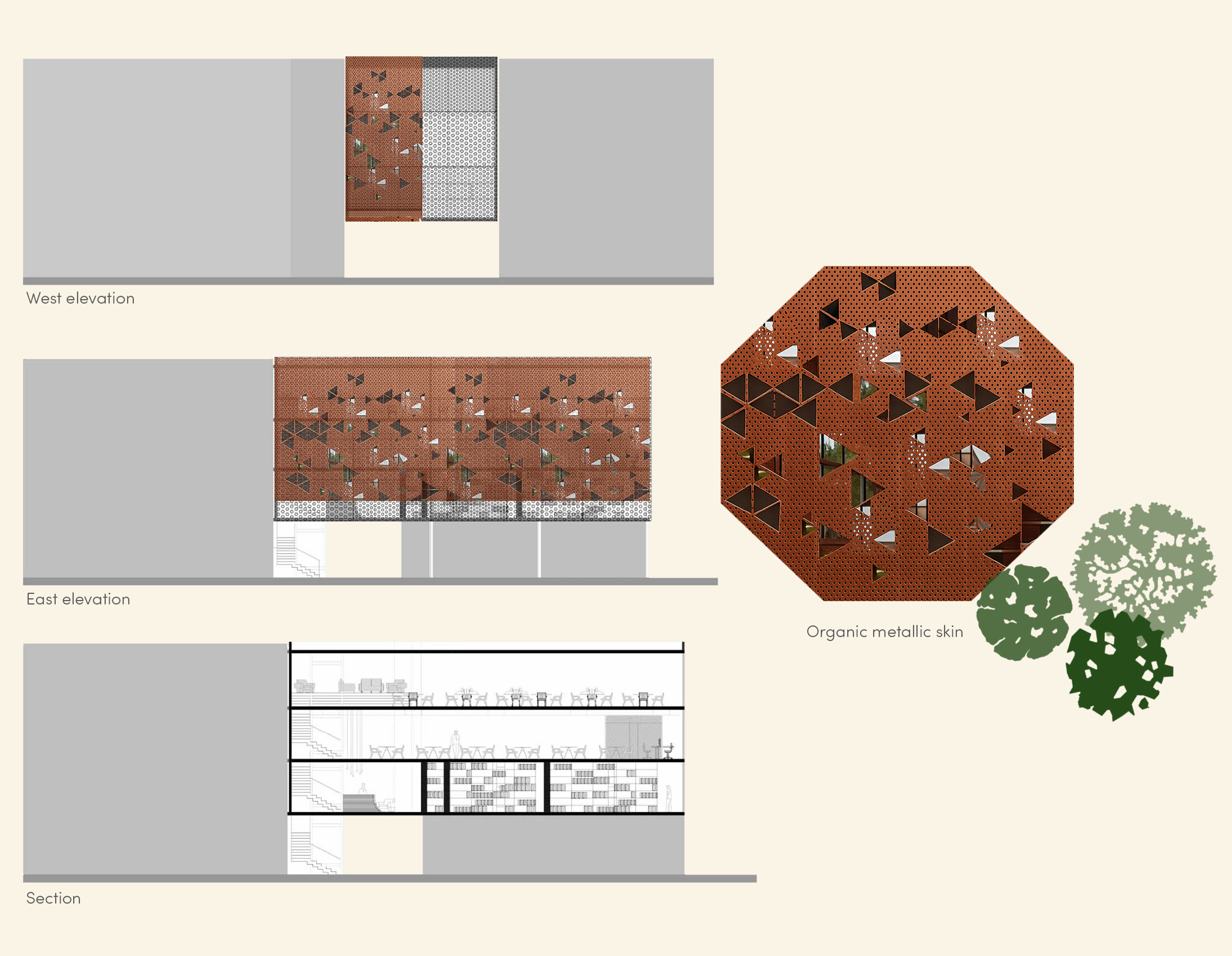
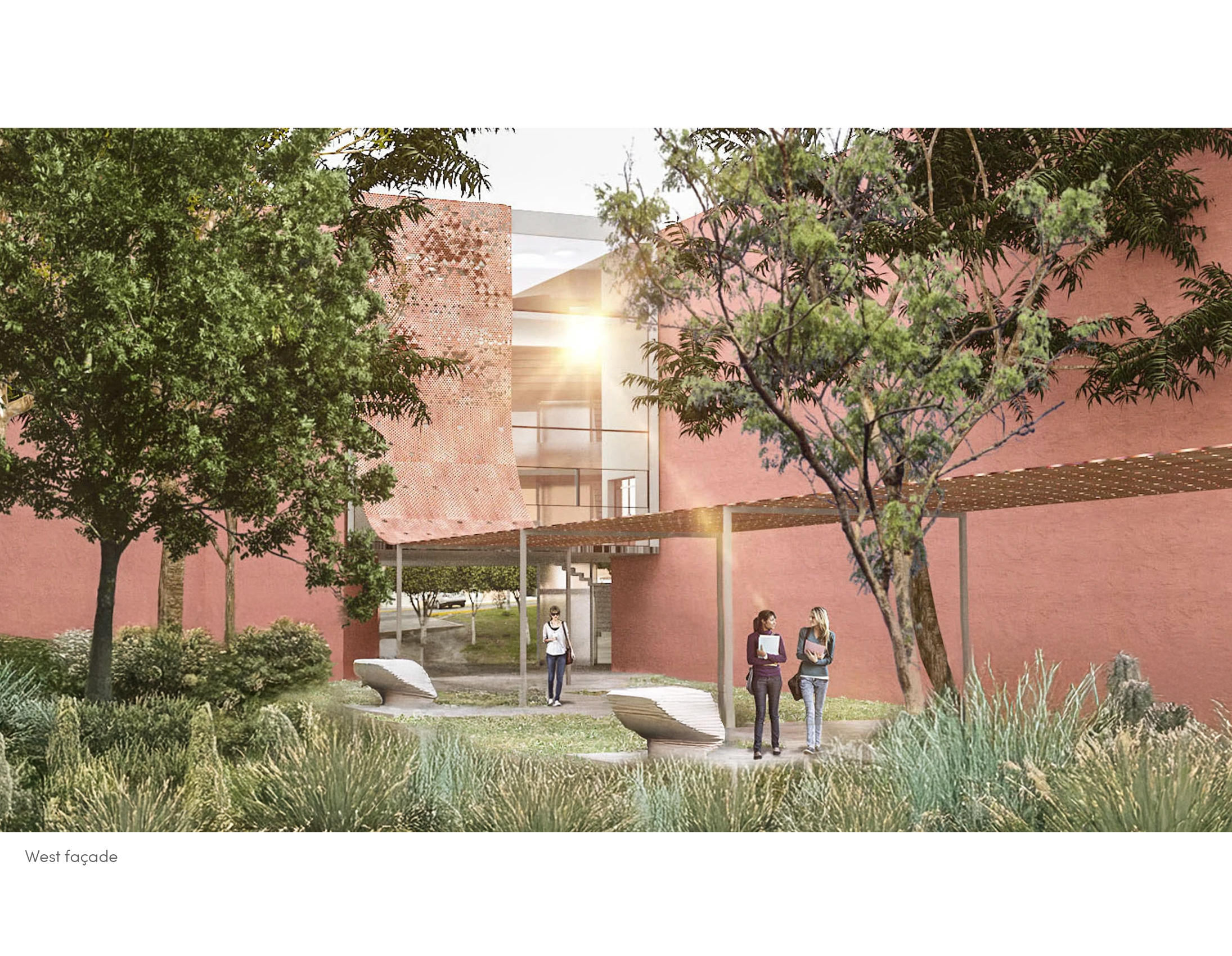
The study center was strategically placed at the point where the two academic buildings, B and C, are closest, creating a connective bridge that integrates both structures. Its form adapts to the existing void between the buildings, and it is wrapped in a copper-colored metallic skin. This skin is made of perforated metal panels that layer small circular holes with a larger, organic geometric pattern inspired by the dappled shadows cast by trees under strong sunlight. This effect was designed to recreate the sense of comfort and protection that tree cover provides, softening natural light while also mitigating heat gain on the east- and west-facing façades. The north-facing windows remain uncovered to maximize natural illumination. The metal mesh, almost identical in tone to the original campus buildings, helps the new volume blend into its context while offering a modern texture and expression. This skin also extends to form a canopy over the main outdoor walkway at the west entrance, protecting students from rain and offering shade during hot days.
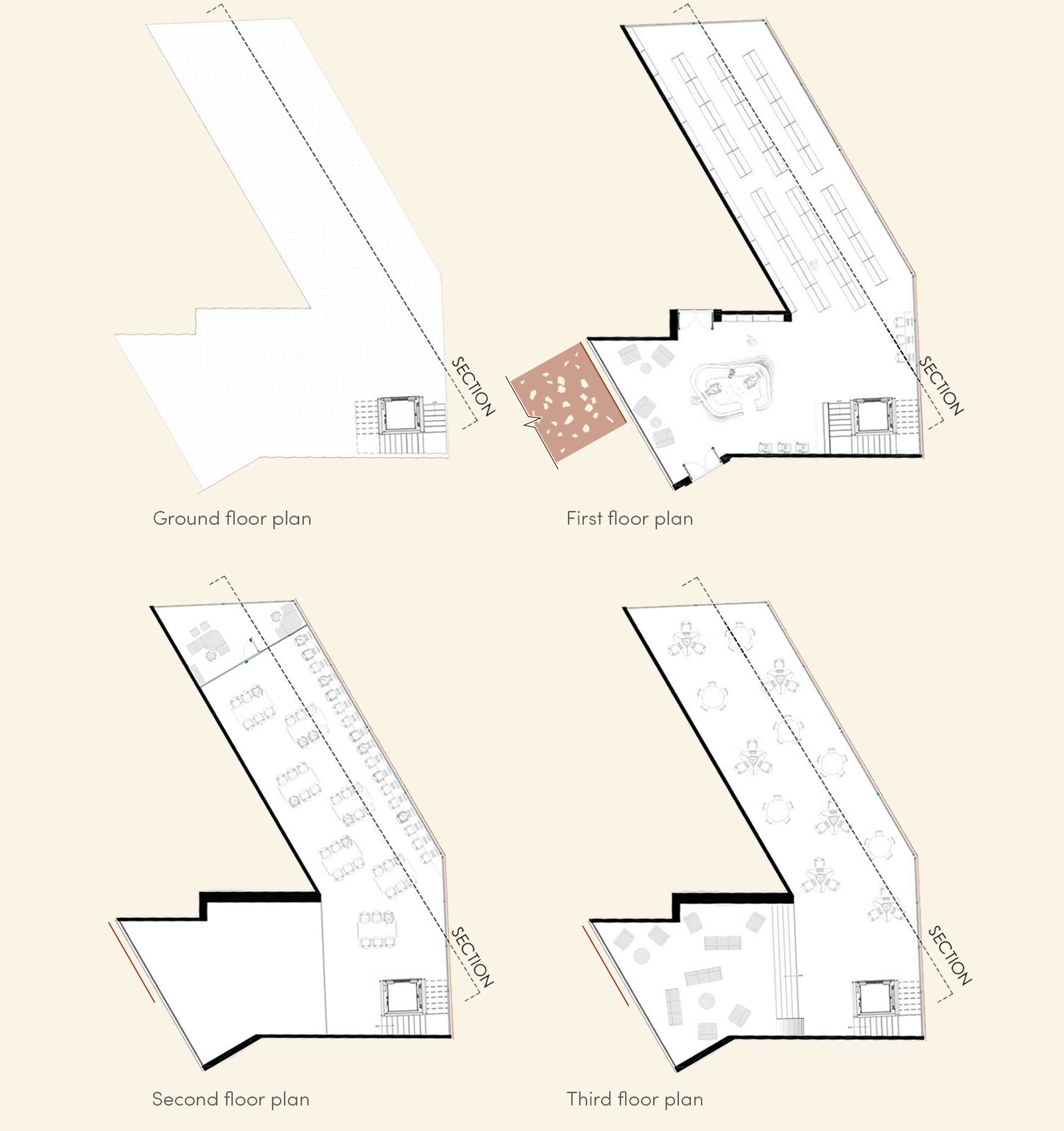
The study center is organized over four levels.
The ground floor, located at the basement level of both buildings due to their raised entrances, functions as a circulation hub. It includes an elevator surrounded by a staircase, allowing vertical movement through the center. This level is open on both ends, connecting the green atrium on the west side with the parking lot and auditorium to the east.
The first floor serves as the primary access level, with three entrances: from the ground floor elevator/stairs and directly from buildings B and C. These lead into a central double-height lobby with a seating area by the west window. Behind the lobby lies the library, designed with generous shelving, dedicated computer terminals for catalog access, and ample light and circulation.
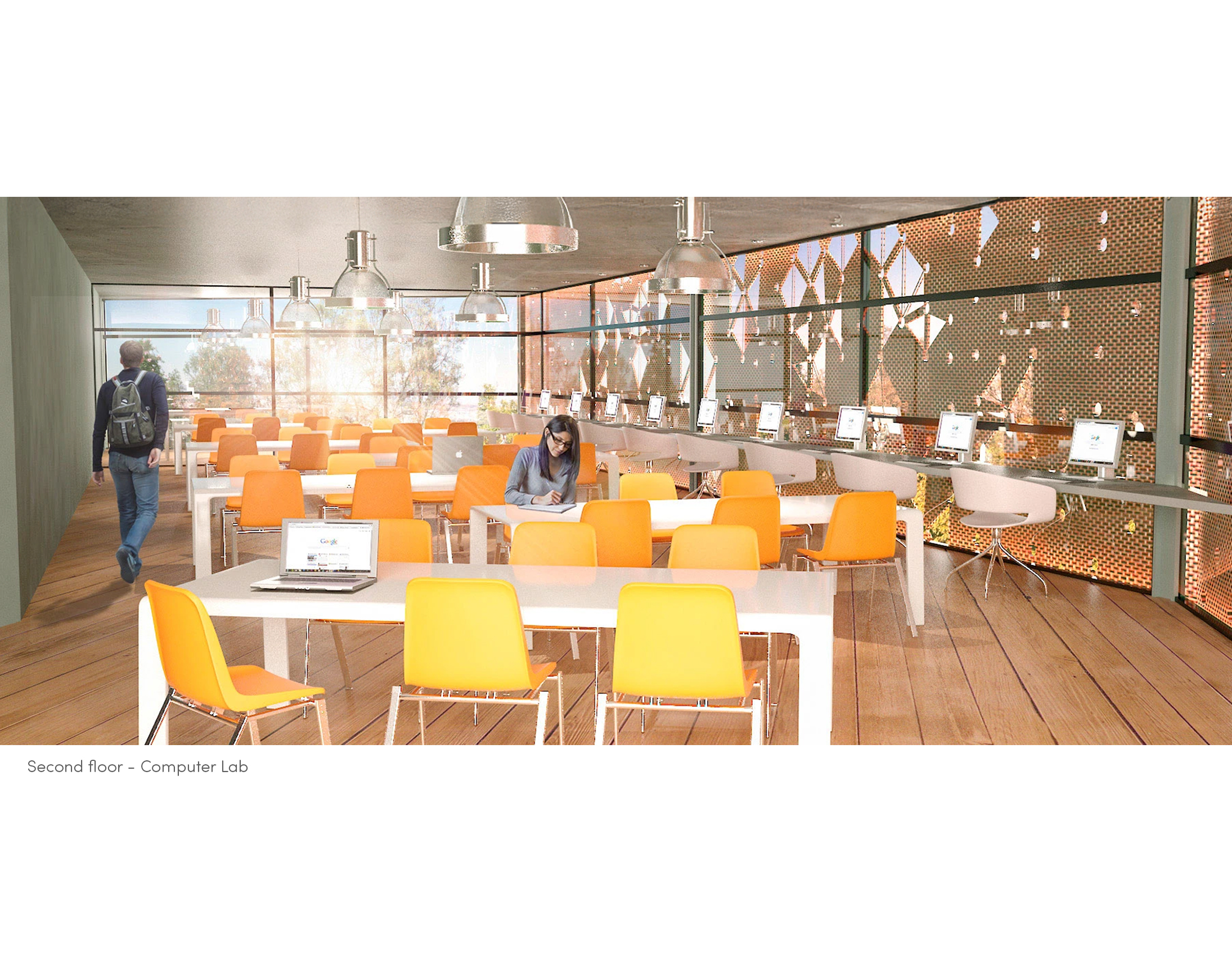
The second floor houses the computer lab, equipped with numerous workstations and modular desks that can adapt to different group configurations. At the south end, there’s a staff office for those managing the space.
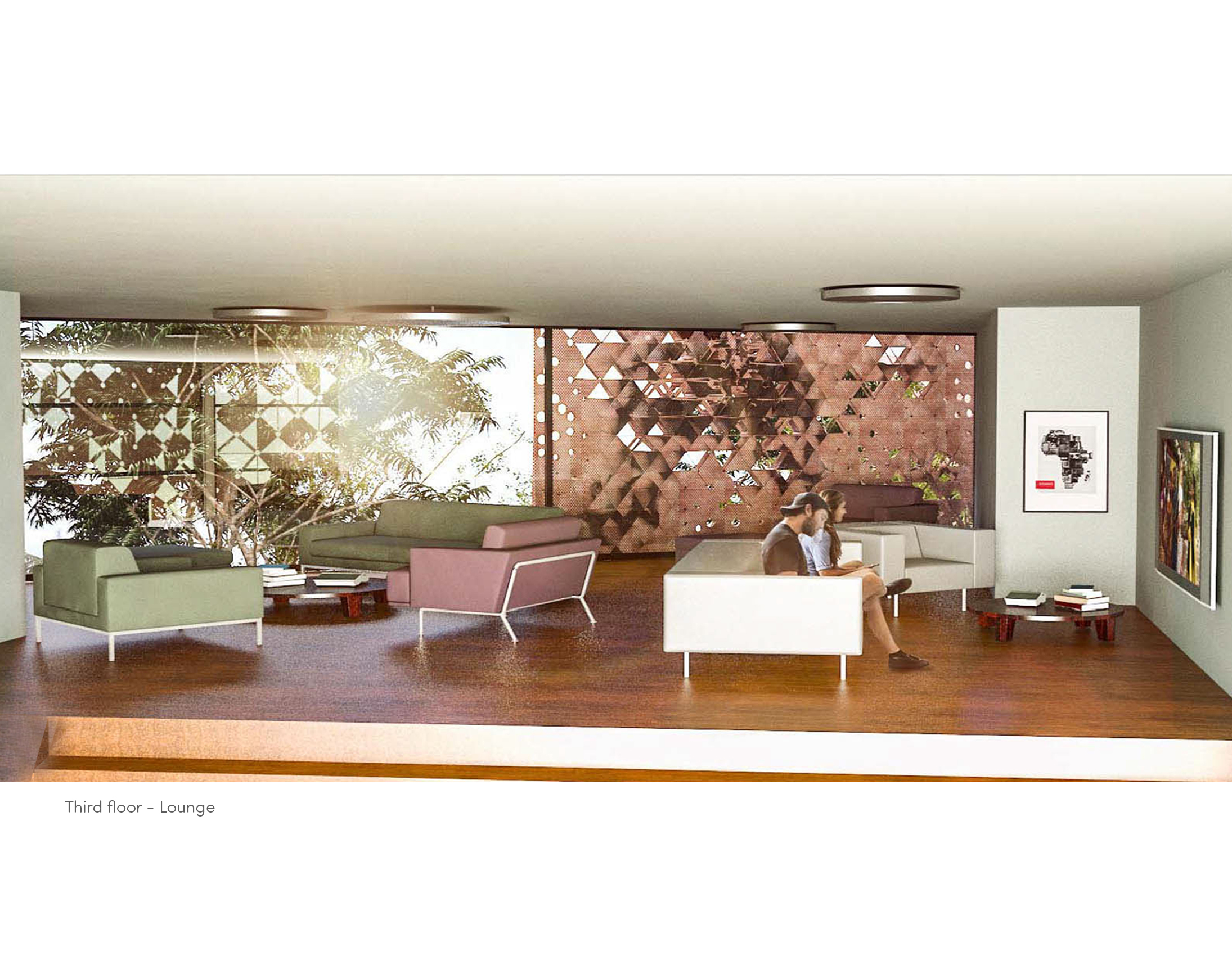
The third floor is a co-working zone, furnished with modular seating, additional computers, a lounge for quiet reading, and a screen for presentations or special screenings.
All levels are seamlessly connected via the central elevator and surrounding staircase, ensuring full accessibility and smooth circulation throughout the center.
This study center represents more than just a solution to spatial and functional problems, it stands as a symbol of what thoughtful, intentional design can offer a university community. By bridging disciplines, buildings, and people, the space encourages a new culture of collaboration, creativity, and academic growth. It respects the architectural identity of its surroundings while introducing a bold and modern language that speaks to the future of education. Above all, it was designed for the students, to support their work, inspire their ideas, and become a place where innovation and learning converge daily. Through this project, architecture not only shapes space, but also strengthens community.